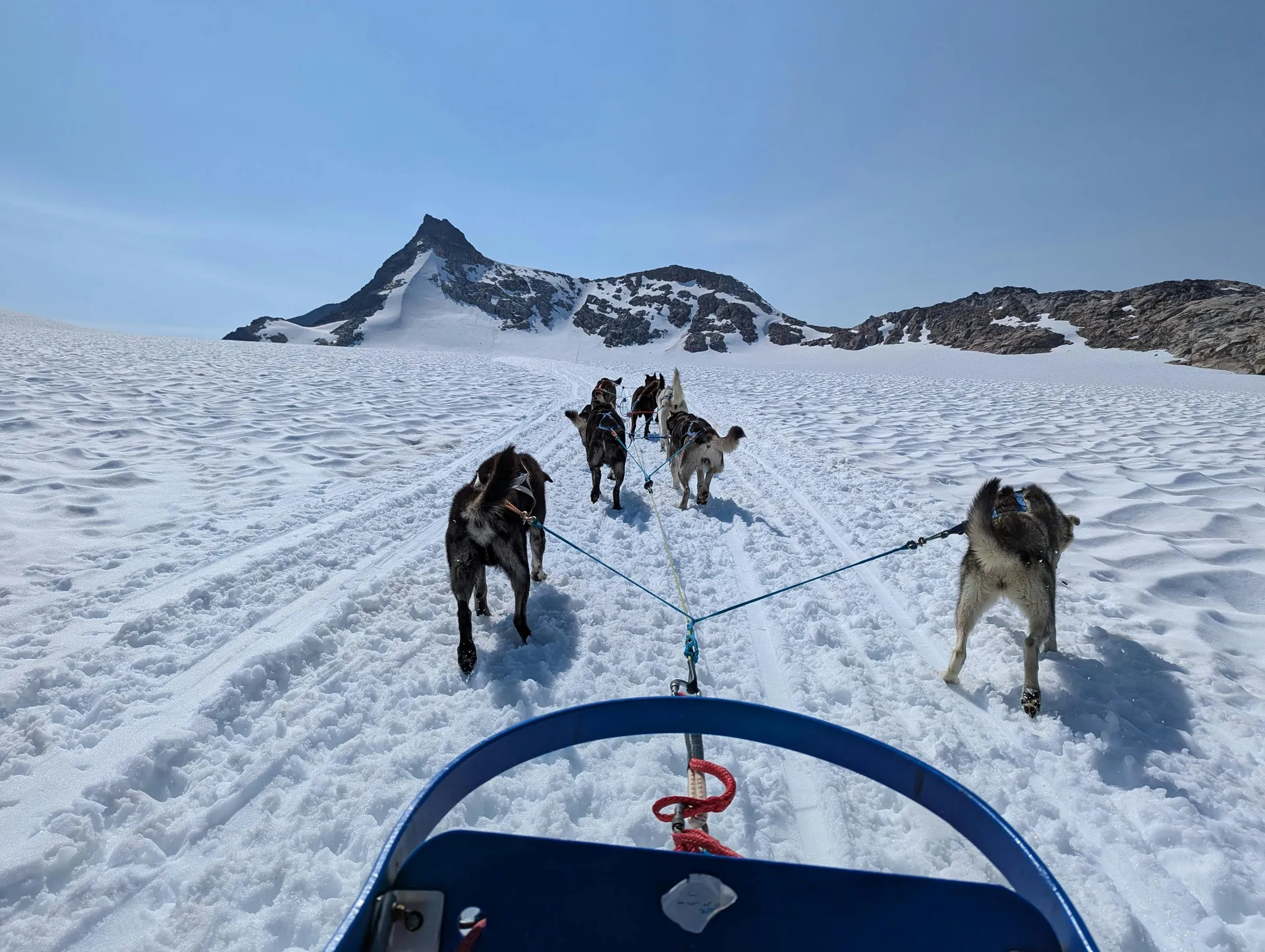
The Mushing Capital of the Interior
Fairbanks demands absolute wilderness respect. The world’s most dedicated mushers condition their canine athletes here, cutting paths through the boreal forest under the erratic glow of the Northern Lights. You are entering the undisputed mushing capital of the interior. The coastal trails melt away, replaced by dry, biting cold and miles of frozen taiga. When the musher pulls the snow hook, the raw power of the team instantly translates into forward momentum, pulling the gangline taut across the packed powder.
The Ultimate Synergy: Mushing & The Aurora Borealis
Night runs push every boundary. Fairbanks sits directly under the Auroral Oval, a geographical reality that creates the highest probability of Northern Lights viewing in the United States. You strap on a headlamp, harness the team, and slide into the darkness. If atmospheric conditions align, the sky erupts in neon green and violet bands. Tracking these geomagnetic storms requires precise timing—we advise consulting the official Explore Fairbanks Aurora Tracker before committing to an evening slot.
For travelers aiming to combine these phenomenons, securing a specialized evening dog sledding run with local pickup guarantees you hit the trails at the optimal hour. Understanding the best time and weather for dog sledding dictates whether you ride under the midnight sun or the auroral glow. The sled glides silently, allowing you to hear the rhythmic breathing of sixteen Alaskan Huskies working in absolute unison.
Fairbanks Mushing Logistics & Seasonal Expectations
| Tour Type | Typical Duration | Best Time of Day | Intensity Level |
|---|---|---|---|
| Kennel Visit & Meet | 1-2 Hours | Daylight | Low |
| Boreal Forest Run | 2-4 Hours | Daylight/Dusk | Moderate |
| Aurora Night Mushing | 3-5 Hours | Night (9 PM – 2 AM) | High |
Understanding Interior Conditions
Extreme Cold Management
Interior winters forgive absolutely nothing. Unlike the milder coastal routes, the interior hits you with a dry, aggressive cold. Temperatures routinely plummet below -20°F. Surviving and enjoying this climate means abandoning standard ski jackets for heavy-duty Arctic gear—think Baffin boots, thick neoprene face masks, and insulated mittens. This is the exact terrain that forged the legendary Yukon Quest mushers. It’s the kind of freezing cold that you have to properly prepare for. Properly outfitting yourself requires understanding what goes into a musher’s sled and gear bag. The physical demands of interior mushing weed out casual hobbyists.
“The silence of the boreal forest at 20 below zero, broken only by the rhythmic panting of the team and the runners on the snow, is an experience that defines the Alaskan interior.”
Local Trail Systems & Professional Kennels
Geography dictates the training regimen. Mushers utilize the frozen waterways and sprawling spruce forests, specifically the corridors managed by the Alaska Department of Natural Resources at the Chena River State Recreation Area. When you visit a local kennel, you bypass the commercialized petting zoos found in lower latitudes. These operations breed serious athletes.
You might spend time with wheel dogs that powered through the Yukon Quest or lead dogs preparing for the legendary Iditarod. For those tight on time, taking a short drive to the North Pole for a concentrated 30-minute mushing experience delivers a rapid, authentic taste of the sport across teh frozen riverbeds. Local sprint racing also dominates the Fairbanks calendar. The Alaska Dog Mushers Association maintains the Jeff Studdert Race Grounds, a focal point where sprint teams clock blistering speeds over shorter distances.
Safety & Animal Welfare
Extreme temperatures require specialized physiology. Alaskan Huskies possess a physical makeup engineered for sub-zero exertion. They have a counter-current heat exchange system in their paws and dense double coats that insulate against the biting wind. Local operators adhere strictly to temperature safety cut-offs, guided by physiological research from organizations like the International Sled Dog Veterinary Medical Association.
These standards protect both the canine athletes and the human passengers. Before booking any extensive backcountry expedition through our guided tours directory, confirm that the outfitter furnishes certified extreme-cold weather gear. Mushing operations in the interior prioritize dog welfare above human comfort. The dogs eat a specialized, high-fat diet—often a mixture of raw meat, kibble, and warm water—designed to sustain their internal furnaces during fifty-mile runs.